

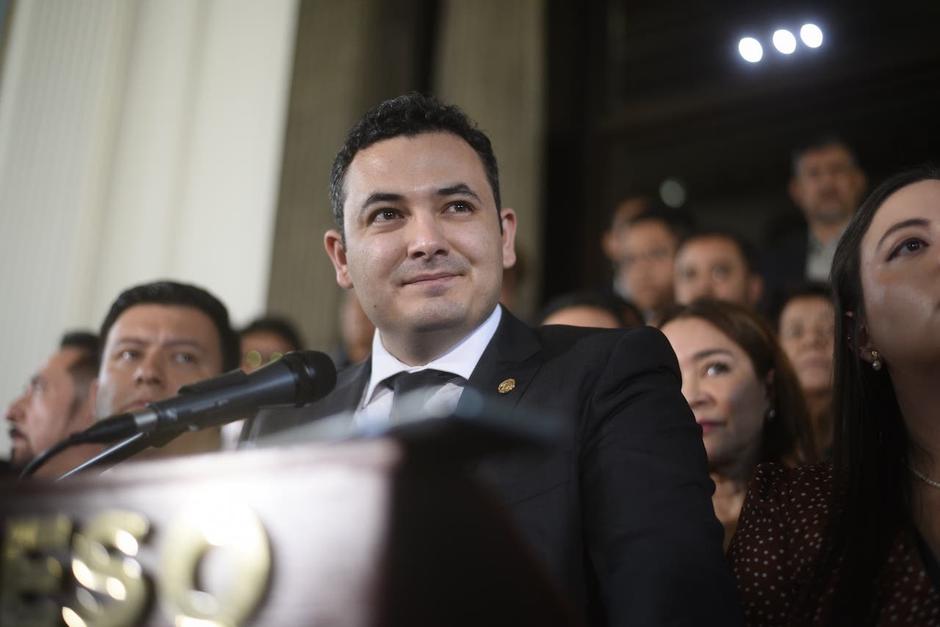
Congressman Samuel Pérez Álvarez, a member of the political movement that emerged alongside President Bernardo Arévalo, is currently at the center of a storm over an altercation that occurred on January 14, 2025, in the Congress of the Republic of Guatemala.
The Public Prosecutor’s Office (MP) recently submitted a petition to the courts seeking to remove his parliamentary immunity, having concluded that his conduct could represent significant administrative and criminal violations.
A Seemingly Small Episode or an Overreach of Authority with Lasting Repercussions
The case began when the legislator intercepted and tore up a letter that another congressman—Neftalí Chocooj de Cabal—was attempting to deliver to President Bernardo Arévalo de León during his speech marking the first year of his administration. The Human Rights Prosecutor’s Office has characterized this act of tearing up the letter as a possible manifestation of abuse of authority and discrimination—criminal offenses that would justify Congress authorizing a formal investigation.
Pérez himself responded with irony to the charge, calling it an instance of “lettericide” and asserting he had no aim to offend beyond political sparring, and he also dismissed the accuser by labeling him corrupt.
Why does the removal of immunity hold significance?
In Guatemala, legislators receive immunity to safeguard their political independence, yet this protection can be lifted when signs of power misuse or discriminatory actions emerge.
If Congress authorizes the Public Prosecutor’s Office’s petition and the Supreme Court of Justice allows the preliminary hearing to proceed, Pérez may find himself subject to criminal action, potentially opening the door to penalties that span from administrative fines to proceedings in ordinary courts, where prison terms could be imposed depending on the gravity of the alleged offenses.
Furthermore, this case is unfolding amid tensions between the Public Prosecutor’s Office and the Movimiento Semilla party, with multiple requests to lift immunity currently pending for various incidents, which has sparked public debate over the legitimacy and possible politicization of legal proceedings against figures close to President Arévalo.
Pérez’s situation is not just an isolated episode of misconduct in the parliamentary chamber; it has advanced into a legal matter that may shape his political path and overall influence in the country. If the removal of his immunity is upheld, the congressman will enter proceedings within the regular justice system, where the outcomes remain undefined.